
29 May DRUG PRICING REFORM IS IMPORTANT—BUT PAYMENT PREVENTION SAVES MEDICAID DOLLARS TODAY
Drug pricing reform has become a major focus of Medicaid cost-containment efforts. Policymakers continue exploring supplemental rebate programs, alternative purchasing models, and initiatives such as CMS’s GENEROUS Model in an effort to reduce prescription drug spending and improve purchasing efficiency.
These strategies may help lower healthcare costs, but they address only part of Medicaid’s broader financial challenge.
Significant opportunities for savings also exist within the claims payment process itself, where inaccurate eligibility information, unidentified commercial coverage, incomplete third-party liability (TPL) records, and coordination of benefits (COB) failures continue to drive avoidable spending.
Medicaid’s financial performance is influenced not only by what it pays for healthcare, but by whether it should have paid the claim at all.
THE DIFFERENCE BETWEEN COST REDUCTION AND COST AVOIDANCE
Drug pricing reform focuses on lowering the amount Medicaid pays for covered services.
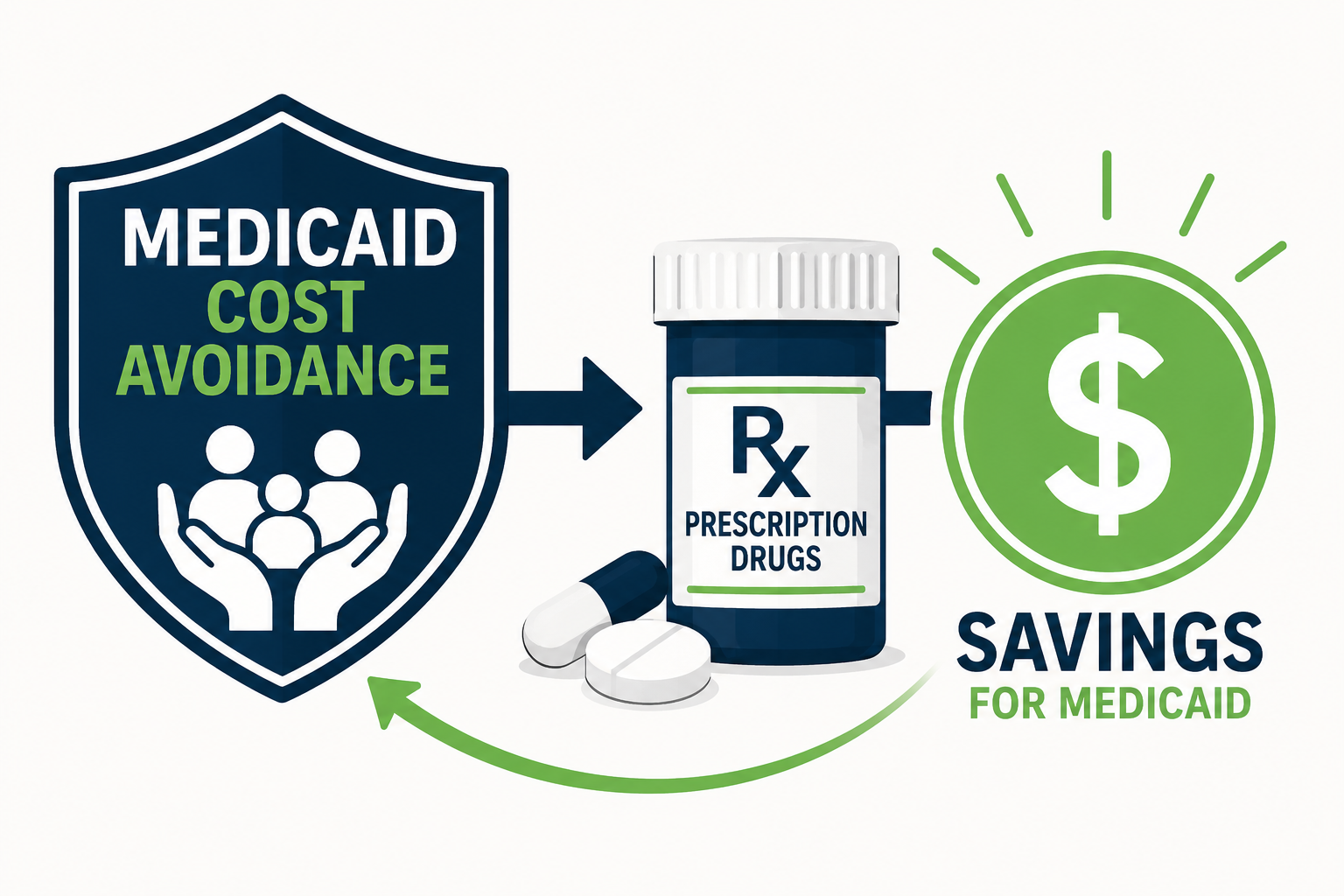
Cost avoidance focuses on preventing unnecessary expenditures before they occur.
The distinction is important because a claim can be paid incorrectly regardless of its price.
Even if future reforms successfully reduce prescription drug costs, Medicaid will continue facing payment accuracy challenges related to eligibility verification, coverage identification, and benefit coordination.
A lower-cost claim that should have been paid by another insurer remains an improper payment.
For Medicaid agencies seeking meaningful and sustainable savings, preventing avoidable claims can be just as important as negotiating lower reimbursement rates.
THE COVERAGE VISIBILITY PROBLEM
One of the most persistent drivers of improper payments is the inability to identify all available coverage before a claim is adjudicated.
Commercial insurance status changes constantly. Beneficiaries gain employer-sponsored insurance, switch plans, add dependents, lose coverage, get married, and move between programs throughout the year.
The challenge is not that these changes occur. The challenge is that Medicaid systems often learn about them after claims have already been processed.
Coverage may become active before it appears in Medicaid records. Information identified at the point of service may never reach broader Medicaid systems. Carrier reporting delays can create visibility gaps that last for weeks or months. During those gaps, Medicaid is forced to make payment decisions without a complete picture of available coverage.
Unknown commercial coverage becomes unknown third-party liability. Unknown third-party liability becomes improper payments. And improper payments become avoidable Medicaid spending.
WHY PREVENTION OUTPERFORMS RECOVERY
Post-payment recovery programs remain an important component of program integrity efforts. Recovering funds that should not have been paid is valuable and necessary.
However, recovery addresses problems only after the payment has occurred.
By the time recovery efforts begin, Medicaid has already paid the claim, resources have already been consumed, and the original payment error has already happened.
More importantly, federal payment accuracy measurements evaluate whether claims were processed correctly at the time of adjudication. Recovering funds later does not change the original payment decision.
This is why prevention consistently delivers greater value than recovery alone.
Every coverage record identified before adjudication is one less opportunity for improper payment.
Every claim prevented is one less claim to recover.
PREVENTION SUPPORTS PAYMENT ACCURACY
As federal scrutiny of Medicaid payment accuracy continues to increase, prevention becomes even more important.
PERM evaluates whether claims were paid correctly based on the information available at the time of payment. Timing matters.
If commercial coverage is identified after a claim is paid, the original payment error still occurred. If eligibility information is outdated during adjudication, recovery efforts do not erase the initial mistake.
Improving payment accuracy requires improving the quality, completeness, and timeliness of the information available before payment decisions are made.
The earlier coverage is identified, the greater the opportunity to prevent improper payments before they occur.
THE MOST IMMEDIATE SAVINGS OPPORTUNITY AVAILABLE TODAY
Many policy initiatives promise future savings. Drug pricing reforms, demonstration projects, and legislative changes often require years before their impact can be fully realized.
Payment prevention technologies offer something different.
It creates opportunities for immediate action.
Medicaid agencies and managed care organizations can improve eligibility verification, strengthen TPL identification efforts, enhance coordination of benefits operations, and leverage more current coverage data today.
These initiatives can begin generating results without waiting for new legislation, federal approvals, or regulatory changes.
SUSTAINABLE PROGRAM INTEGRITY REQUIRES BOTH STRATEGIES
Drug pricing reform and payment prevention should be viewed as complementary strategies, not competing priorities.
Reducing the cost of healthcare services helps control spending. Preventing unnecessary payments improves payment accuracy and eliminates avoidable expenditures before dollars leave the program.
The most successful Medicaid programs will pursue both approaches simultaneously.
Long-term program integrity requires both cost control and payment accuracy. Agencies that improve eligibility visibility, identify commercial coverage earlier, strengthen TPL operations, and prevent improper payments before they occur will be best positioned to achieve sustainable savings and stronger program integrity outcomes.