
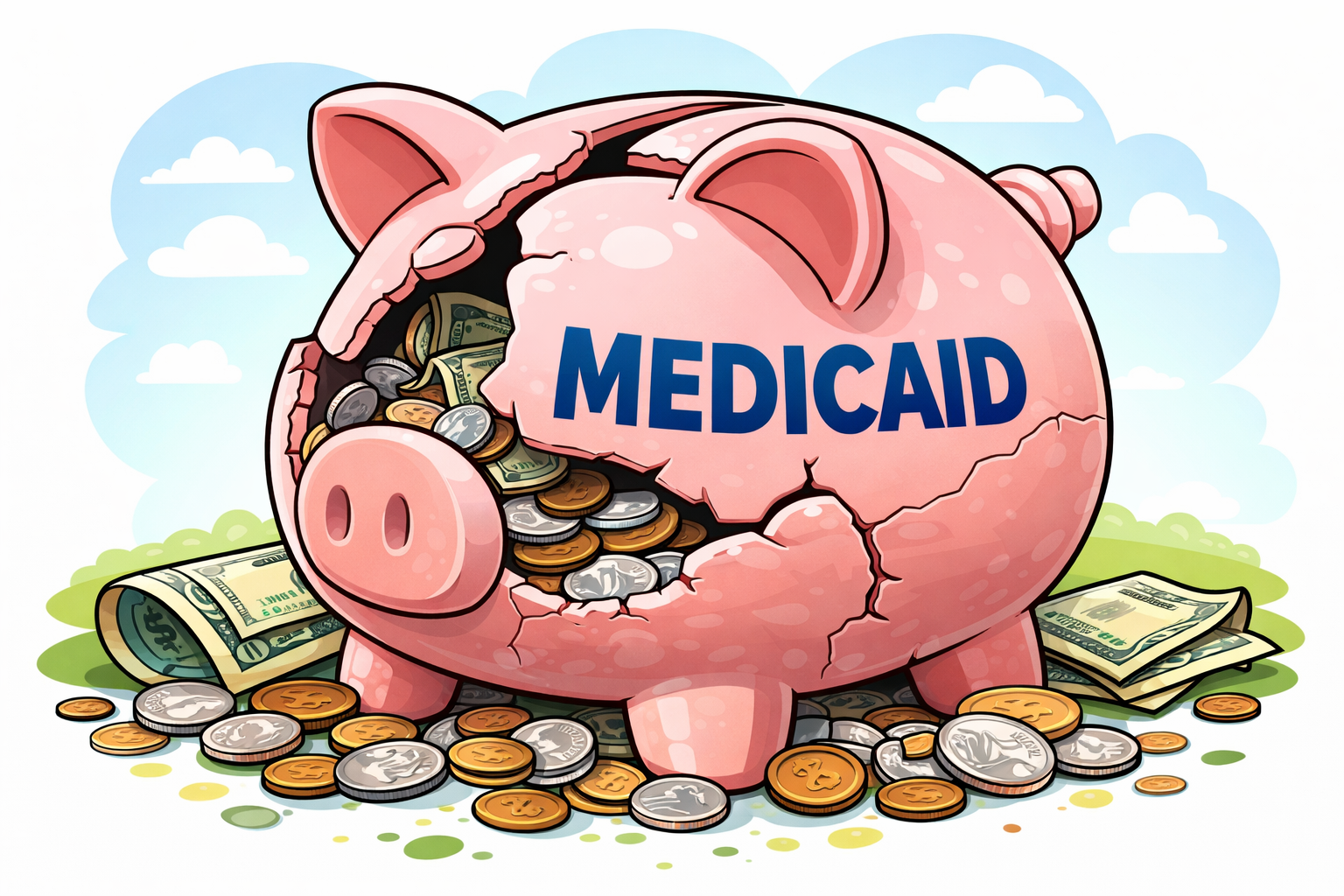
25 Mar BRIDGING THE DISCONNECT: HOW INEFFICIENCY CONTINUES TO CHALLENGE MEDICAID
Medicaid remains one of the most critical public programs in the United States, delivering healthcare coverage to millions of individuals across diverse and often vulnerable populations. As its role has expanded, so has the responsibility to manage its resources with precision. However, fraud, abuse, and administrative inefficiencies continue to undermine that goal, resulting in billions of dollars in avoidable spending each year.
While fraud—intentional deception to obtain unauthorized payments—often receives the most attention, it represents only one dimension of the problem. Many improper payments arise from far less visible causes, including administrative complexity, fragmented data, and limitations in how information is collected and shared. These issues are not driven by bad actors alone, but by systemic constraints that make it difficult to ensure accuracy at scale.
Medicaid operates in a highly dynamic environment. Eligibility is subject to frequent change, influenced by income, employment, and household composition. At the same time, beneficiaries may have access to additional sources of coverage that are not always captured within Medicaid systems. When these factors are not reflected in real time, the program is forced to make payment decisions based on incomplete or outdated information.
This disconnect is rooted in the program’s legacy infrastructure. Many administrative processes were designed decades ago, when Medicaid served a smaller population and operated within a less complex healthcare ecosystem. Data collection relied heavily on self-reporting, updates occurred periodically rather than continuously, and coordination across payers was limited. Although the program has evolved significantly, many of these foundational processes have remained largely unchanged.
The result is a persistent gap between current conditions and system visibility. Eligibility data and third-party liability information may lag behind real-world changes by weeks or months. During this window, claims are processed without full awareness of other coverage or updated eligibility status. These timing gaps create a structural vulnerability—one that allows improper payments to occur even when program rules are clearly defined.
The impact of these inefficiencies extends beyond financial loss. As improper payments accumulate, they place pressure on state budgets and reduce the resources available for essential services. States must balance the need to maintain access to care with the obligation to improve payment accuracy, often under increasing federal oversight and accountability requirements.
Historically, Medicaid has addressed these integrity challenges through retrospective measures. Audits, compliance reviews, and recovery efforts have been used to identify and correct improper payments after they have occurred. While these approaches are necessary, they are inherently limited. Recovery is often incomplete, and the administrative cost of identifying and reclaiming funds can be substantial.
As Medicaid continues to grow in size and complexity, a more forward-looking approach is required. Improving program integrity depends on the ability to access and act on accurate information at the moment decisions are made. Real-time eligibility verification, enhanced data integration, and better coordination across payers can significantly reduce the likelihood of improper payments at the point of adjudication.
This shift toward prevention represents a critical evolution in how Medicaid manages risk. By addressing the root causes of inaccuracy—rather than relying solely on post-payment correction—programs can improve efficiency, reduce administrative burden, and better protect public resources.
Ultimately, strengthening Medicaid integrity is about aligning systems with reality. As long as there is a gap between what is happening in real time and what the system can see, errors will persist. Closing that gap is essential not only for financial stewardship, but for ensuring that Medicaid can continue to deliver on its mission in an increasingly complex healthcare landscape.